Wednesday, September 11, 2024

What Does the Bible Say About Our Universe?

 (0) The universe is intended to display God's power and majesty.

"The heavens declare the glory of God;

the skies proclaim the work of his hands.

Day after day they pour forth speech;

night after night they reveal knowledge...

... In the heavens God has pitched a tent for the sun."

(Psalm 19)

In all these passages, we see God as the Creator of the universe, as the one who created all things and continues to maintain all things.


"For since the creation of the world God's invisible qualities--his eternal power and divine nature--have been clearly seen, being understood from what has been made, so that people are without excuse.

(Romans 1:20)


(1) The universe had a Creator.

"In the beginning God created the heavens and the earth."

(Genesis 1:1)


(2) The universe is majestic and "good" (Hebrew towb, beautiful.)

"God saw all that he had made, and it was very good."

(Genesis 1:31)

 Creation is called "towb" seven times in Genesis 1.


(3) The earth is full of incredible living things!

So God created the great creatures of the sea and every living thing with which the water teems ... according to their kinds, and every winged bird according to its kind. And God saw that it was good."

(Genesis 1:21)

(4) The universe involves processes, in natural, organized fashion. See this description in Day 3 of Creation: 

Let the land produce vegetation: seed-bearing plants and trees on the land that bear fruit with seed in it, according to their various kinds.... The land produced vegetation: plants bearing seed according to their kinds and trees bearing fruit with seed in it according to their kinds."

(Genesis 1:11-12)

Note the deliberate, consistent process, trees, fruit, seed, more trees....


(5) The universe has a special creature, "mankind" (Hebrew adam), who has a unique role in this creation and with this Creator.


Then God said, “Let us make mankind in our image, in our likeness ...

So God created mankind in his own image,

    in the image of God he created them;

    male and female he created them.

God blessed them and said to them, “Be fruitful and increase in number; fill the earth and subdue it. Rule over the fish in the sea and the birds in the sky and over every living creature that moves on the ground.

(Genesis 1:26-28)


(6) Some phenomena have both a physical and spiritual explanation.


Acts 12:23 on Herod's death:

"Immediately, because Herod did not give praise to God, an angel of the Lord struck him down, and he was eaten by worms and died."


There are two explanations here for Herod's death.  Which is correct? 

  • Did an angel strike him down?
  • Or was he was eaten by worms?  

Both are true!


A digression -- the universe is beautiful


Beginning in Job 38 and continuing for three chapters, God challenges Job to step up and explain, even control, a variety of natural phenomena.


"Where were you when I laid the earth’s foundation? Tell me, if you understand.

...

On what were its footings set, or who laid its cornerstone—

while the morning stars sang together and all the angels shouted for joy?"


Have you ever given orders to the morning or shown the dawn its place, ...


Have you entered the storehouses of the snow or seen the storehouses of the hail,..."


(Me: No -- but I'd like to!)


Can you bind the chains of the Pleiades?

    Can you loosen Orion’s belt?

...

Do you know the laws of the heavens?


(Me: No -- but I'd like to!)


If we are here as the result of a Creator, the Creator who challenges Job to "give order to the morning", then our response will be 

"Lord, our Lord,

how majestic is your name in all the earth!

You have set your glory

in the heavens...."

(Psalm 8)


(There is also a natural, built-in desire to explore the universe around us. This is part of the calling to be a scientist!)

Saturday, September 7, 2024

Childhood: Science, Christianity

In this blogpost I briefly summarize my childhood interests.


My father was a university professor.

My mother was a science teacher, history teacher and accountant....


My childhood home in Houston, Texas, USA, was full of books. 


My mother taught me to read before I began school.


I loved pictures of planets and galaxies. (How big the universe was!!)


I saw the rings of Saturn through a small telescope. 


We watched the first satellite go overhead our home in Houston.


I drew pictures of the constellations.


I used a primitive handheld counter to count through the integers. 


I watched thunderstorms and lightning move slowly across the Chisos Mountains in West Texas.(See the beautiful volcanic dome in the background!) 


I did childish experiments with pillbugs in my backyard in Houston.


In high school I wrote a paper on amino acids. I decided to be a microbiologist!


In high school I also photocopied the first 100,000 digits of pi from the nearby college library!


My parents' religious life was sporadic. Beginning when I was about eight, we began attending a church. 


In my teens I had a friend, Tim, who was my competitor for "smartest" (nerdiest?) high school student. 


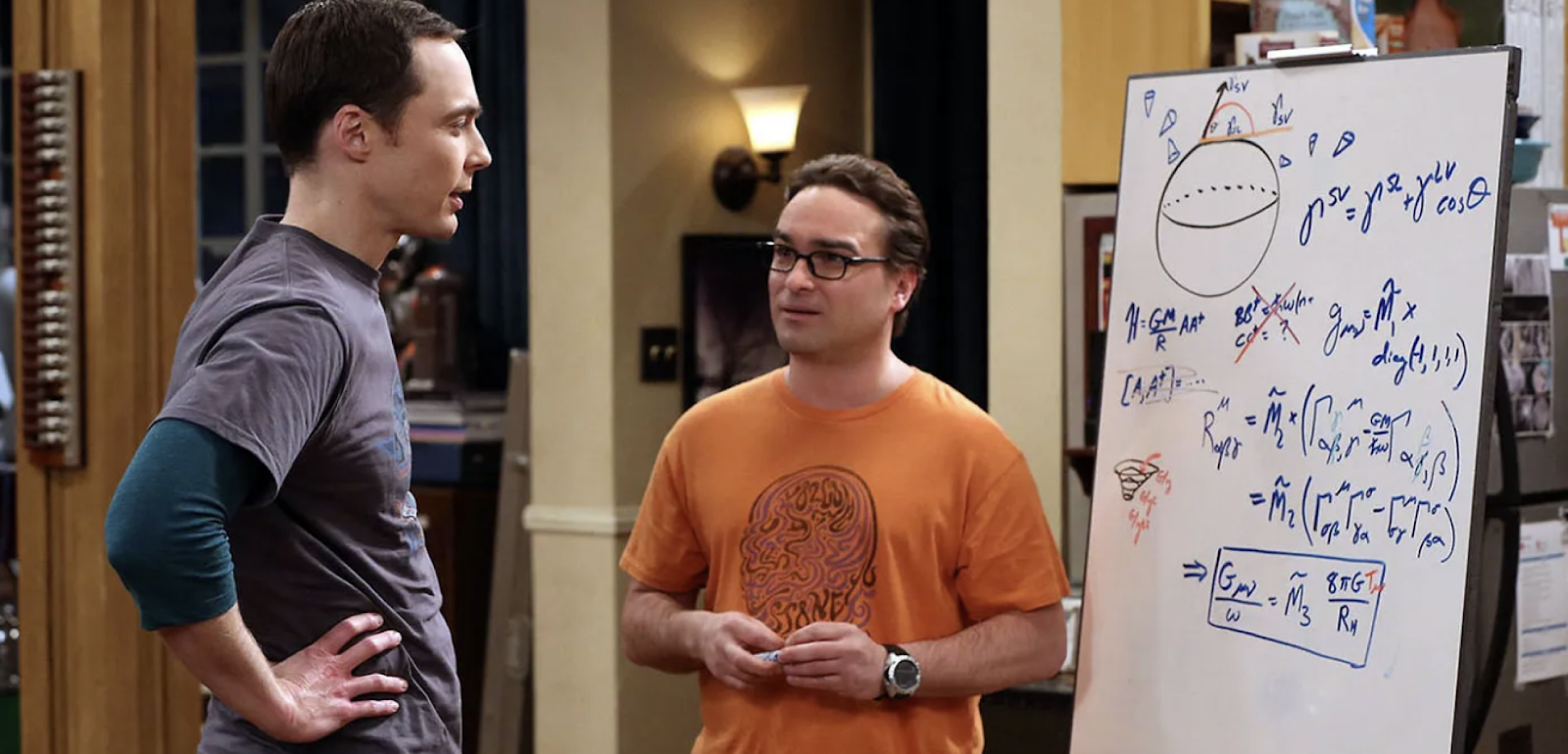
Tim and I challenged each other regularly. (He was Sheldon Cooper and I was Leonard Hofstadter -- or the other way around?)


Tim invited me to his church and I began attending regularly. There I came to believe 

  • that the Creator of the Universe personally cared for me,
  • that God had entered His universe in human form,
  • and set up a system in which I was freed to enter His kingdom. 

In retrospect, that is pretty wild. (I'll say more later.)


So I made a conscious decision to be a disciple of Jesus, and, as a member

of His Kingdom, place all my brokeness under God's control, relying on a promised gift of forgiveness and personal renewal.


Several small changes occurred at the time.


(1) Over several months I discovered I liked other people and I really began to care for others.... so I lost some of my nerdy shyness.


(2) I began to question and then discard the racism I inherited from my upbringing in Texas.


(3) I was still very deeply in love with the universe. (At no time did I sense a conflict between my religious beliefs and my beliefs about science.)


Through 50+ years as a Christian and 47 years as a professional mathematician, my Christian life and my love of science have strengthened each other.


It is common to claim that Christianity and Science are in conflict. Are they? Are the Bible and Science truly in conflict? 


I want to examine that question in four parts:

  • What does the Bible says about our universe?
  • What does Science say about our universe?
  • What does the Bible NOT say?
  • What does Science NOT say?

Friday, August 30, 2024

Mathematician, Scientist, Christian (a joint Christian and Science testimonial)

I will be traveling to Italy October 4-12, 2024, hosted by Faculty Commons, a ministry under Campus Crusade for Christ, International. I wlll give several talks in Italy, at least one or two to a university Christian student group (and their invited friends) arranged by Cru or InterVarsity staff. One of the talks is essentially my testimony as a scientist and a Christian. It is intended to be "evangelistic" and my personal apologetic for Christianity. 

The apologetics part of the talk may be a little understated, but I have often been bothered by those apologetics speakers who claim a "proof" of Christianity. I have no intention of "proving" that Christianity is true but I wish to argue that Christianity is a rationale choice for an intelligent person to make.

I attach links here to a video draft of the apologetics talk I plan to give in Italy, The talk is in six parts. If you get a chance to watch it (it totals 43 1/2 minutes), I would be interested in your reactions to the concepts, to the arguments. (My gmail address is KenWSmith54@...)

(Don't worry too much about video format or stuff like that, as I will be presenting the material live using PowerPoint -- and possibly working with a translator.)

When I recorded this, I was still dealing with the aftereffects of my second bout with Covid, so I struggled throughout trying to suppress coughing! I'm afraid you can tell that sometimes in the audio....

Part 1 (5:31), My upbringing as Christian and scientist

Part 2 (9:14), What the Bible and Science each tell us about our universe

Part 3 (7:08), What the Bible does NOT say about our universe

Part 4 (8:32), What Science does NOT say about our universe

Part 5 (6:46), Can randomness have a purpose?

Part 6 (6:19), Why I think Christianity is true

Any suggestions are appreciated!! thanks. (Feel free to reply on this blog or send me a personal email (gmail) KenWSmith54@...

Ken

PS. Creating this was an interesting exercise. I had not thought about some of these issues for some time and I found it hard to put my thoughts together!

Friday, July 5, 2024

Value and Beauty in Mathematics, Part 1

For almost fifty years I have explored and taught mathematics, at a variety of levels. The study of science often requires a significant amount of mathematical reasoning. Yet students consistently struggle in, and sometimes even dread, their math classes. In this talk I will share some thoughts on the beauty and importance of mathematics, with an emphasis on some simple steps to student success in this important field. 


I want to tell you how to be successful in mathematics. But before I do, I want to tell you why you should care.


1. Mathematics and mathematical exploration is good for the human race!


I am sure you have heard many arguments about mathematics improving science or technology but here are some small examples of which you might not be aware.


Mathematics helps brew good beer. Indeed, a century ago, an engineer at Guinness in Ireland, working on developing quality control, discovered what is now called the Student t-distribution. (The specialist published his results under the pseudonym August Student.) Good beer led to better math led to better beer!


Artists in the Italian Renaissance developed the mathematics of perspective. Filippo Brunelleschi and Leon Battista Alberti were leaders in this field; Leonardo daVinci displays his knowledge of perspective by including the perspective lines in paintings such as The Last Supper. 


Piera della Francisco's Ideal City


da Vinci's Last Supper


This study led to projective geometry which violated classical Euclidean geometry.

And non-euclidean geometry is the background for the theory of relativity. The theory of relativity is used to precisely set the clocks in orbiting satellites so that our GPS coordinates are accurate. There is about a 25,000 nanosecond difference (per day) in the clocks in the standard GPS satellite; if this were not corrected by these clock setting, the GPS coordinates would be off by 25,000 feet (8 kilometers) per day!


Your GPS guide not only relies on the geometry of mathematics but the geometry of relativity! (Where the sum of angles of a triangle is NOT 180 degrees and the Pythagorean theorem does not hold!)


Other examples:

  • The mathematics behind microbiology has helped us develop antibiotics and vaccines and led to fairly rapid development of vaccines during the COVID pandemic.
  • Linear algebra, especially algorithms (a 2-D Fourier transform) are used to find inverse of matrices and more complicated mathematical systems has led to the science of Magnetic Resonance Imaging (MRI). 
  • The seismic imaging process in geology uses a similar inverse problem to map out the geology of a region (such as Mount Vesuvius at the Vesuvius Observatory) without being able to “see” the internal formations.
  • Binary sequences have led to the use of objects like Barker sequences (a Barker sequence of length 11) is used as BPSK signal modulation in many wifi routers.
  • Pseudorandom sequences are behind most computer games, assuring that each gaming experience is different than the last.
  • Number theory that dates back to Fermat has led to public key exchange algorithms behind internet commerce. If you have ever used a credit card to purchase an item online, you have used one of those key exchanges.
These are mere samples from millions of modern applications of mathematics.

But most of these applications involve someone else's knowledge of mathematics; you and I merely benefit from that knowledge, without needing that knowledge ourselves. Are there reasons you, personally, might need to think mathematically? We will explore that in the next blogpost.

Wednesday, October 11, 2017

Faith and Science

Tonight I am a resource at a Cru meeting on apologetics and will focus on Faith & Science.  I hope to have a brief handout which will include my email address and a link to this blog, so that I can provide additional resources.

The Bible's perspective

In Genesis 1 we see each part of the universe created deliberately as an act of God, as beautiful and good. The passage describes the earth "teeming" with life, and describes all of nature as created by God's pleasure in an orderly fashion.

It is reasonable to believe that the Creator of the universe, a universe with physical laws, uses those laws and processes to do his will.

Beginning in Job 38 and continuing for four chapters, God challenges Job to "step to the blackboard" and explain, even control, a variety of natural phenomena. Here are verses 4-11 at the beginning of that passage:
"Where were you when I laid the earth’s foundation?
Tell me, if you understand.
Who marked off its dimensions? Surely you know!
Who stretched a measuring line across it?
On what were its footings set,
or who laid its cornerstone—
while the morning stars sang together
and all the angels shouted for joy?

Who shut up the sea behind doors
when it burst forth from the womb,
when I made the clouds its garment
and wrapped it in thick darkness,
when I fixed limits for it
and set its doors and bars in place,
when I said, ‘This far you may come and no farther;
here is where your proud waves halt’?"

Acts 12:23 on Herod's death:
"Immediately, because Herod did not give praise to God, an angel of the Lord struck him down, and he was eaten by worms and died."

So which is it -- an angel struck him down or he was eaten by worms?  (Or both be true?)

Romans 1:20 -- Nature is a witness to God's work.
"For since the creation of the world God's invisible qualities--his eternal power and divine nature--have been clearly seen, being understood from what has been made, so that people are without excuse."

Psalm 8,
"Lord, our Lord,
how majestic is your name in all the earth!
You have set your glory
in the heavens...."
Psalm 19: 1-4,
"The heavens declare the glory of God;
the skies proclaim the work of his hands.
Day after day they pour forth speech;
night after night they reveal knowledge.

They have no speech, they use no words;
no sound is heard from them.
Yet their voice goes out into all the earth,
their words to the ends of the world.
In the heavens God has pitched a tent for the sun."

Common Myths about Faith and Science

1. The Bible is a science textbook. (This belief, not supported by Scripture, leads to false assumptions by Christians about the world we live in. No, the earth is not flat....)

2. Hebrew scholars insist that creation must have been in six 24-hour days. (Some Young-Earth creationists claim, "Whenever yom [the Hebrew word for day in Genesis 1] is preceded by a numerical article we are forced to accept it as a literal day." A Hebrew scholar, Dr. J. Oliver Buswell reacts to that, "the very form of [this claim] reveals the fact that the author has never had a course in Hebrew...." Although there are different agreements about the various uses of the word yom in Genesis 1, there are significant hermeneutical errors in claiming it must be "24 hours".)

3. Faith is "blind faith", without any justification. (No, a better word might be "trust".  A Christian lives by "trust", relying on an invisible God whose actions may not always be seen.)

4. A naturalistic world view is completely rational and logical. (The argument used to justify naturalism is circular: "I dismiss anything outside the naturalistic world because there is nothing outside the naturalistic world.")

Some Resources that I recommend

American Scientific Affiliation (an organization of scientists who are Christians)
BioLogos (started by Francis Collins) focus on Evolution and Science. The organization is led by biologists who are Christians. BioLogos defends evolution from a Biblical Christian viewpoint.
Reasons to Believe (founded by Hugh Ross) focuses on scientific arguments for Christianity. RTB argues for progressive creation of some type (the universe is billions of years old) but does not endorse evolution.
Musings on Science and Theology, by RJS, is an excellent blog which covers a variety of issues of science and faith, especially as they relate to biology.

The following books are in my personal library. (I have another dozen books or more in my personal library, but these are my favorites.)
"Teaching Science in a Climate of Controversy" (a guide for educators from the American Scientific Affiliation) -- email me for a pdf copy of this.
"Creation of Evolution?" by Charles Hummel, an Intervarsity pamphlet summarizing the issues.. A review appears here.
Science and its Limits, by Del Ratzsch, an excellent examination of what science can and cannot do.
The Language of God, by Francis Collins, explains why Collins sees science as providing evidence for God.
The Fingerprint of God, by Hugh Ross, explains why Ross sees science as providing evidence for God.
The Fourth Day, by Howard Van Till. Subtitle: "What the Bible and the Heavens are telling us about Creation".  The viewpoint of an astronomer.
Science Held Hostage, by Van Till, Young, Menninga.  Subtitle: "What Wrong with Creation Science AND Evolutionism."
Evolution, Nature & Scripture in Conflict? by Pattle P. T. Pun. This a favorite of mine, as Pun aggressively dismantles the arguments for Young-Earth Creationism while carefully explaining what we know about biology and evolution... and scripture.

My contact information

My blog, with links: https://longingforabettercountry.blogspot.com
Email: KenWSmith54 (at) gmail (dot) com